


Marine Reserves

We need only look at the northern Channel Islands for more proof that marine reserves work. Scientists who conducted a five-year review of monitoring at the Channel Islands found fish to be larger and more abundant in marine reserves than in fished areas nearby. Recent research shows those benefits are spilling over to surrounding areas. These findings echo those from reserves around the world.
Marine reserves around the world have proven to increase the size and abundance of marine life in the protected area. As opposed to single species management, marine reserves take an ecosystem approach that protects all living things within a specified area. It works because it is based on science.
Research and Monitoring Tell Us a Lot
A Simple Fact: Larger Fish Produce More Fish
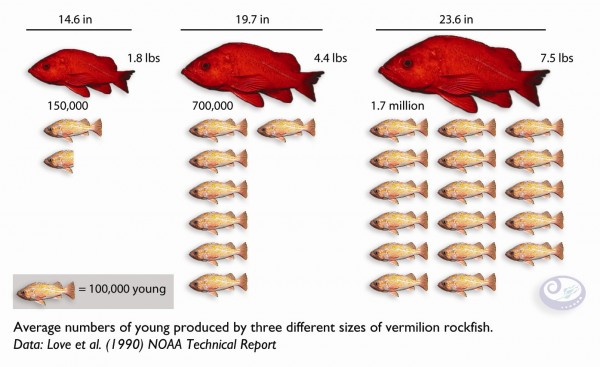
Another Simple Fact: Marine Reserves Produce More Fish and Keep the Eco-System in Balance

The Last Important Fact:Reserves Protect Fish So They Can Mature and Reproduce.

Why We Need Marine Reserves
Marine environments worldwide are under pressure. According to the United Nations Food and Agriculture Organization, more than a third of the world’s assessed fish stocks (37.7%) are overfished. Scientists have counted more than 400 coastal “dead zones,” areas with too little oxygen to support most marine life, mostly caused by nutrient pollution running off the land. Learn more about marine reserves and what they mean for our marine environment.
http://www.youtube.com/watch?v=yZIZKVauboY&feature=related
Friend’s Corner
We are honored that Sylvia Earle would enthusiastically wear a "Reserve Laguna" button to indicate her support for our efforts.
She has been called "Her Deepness" by the New Yorker and the New York Times, "Living Legend" by the Library of Congress, and the first "Hero for the Planet," is an oceanographer, explorer, author...Learn More