


The Laguna Bluebelt Coalition brings together organizations and individuals with a common goal of protecting and restoring marine life, conserving biological diversity, and maintaining healthy, sustainable marine habitats.
Protect Laguna’s Last Mile
 NewThe Last MileFrom Thousand Steps to Three Arch Bay, this is where full protection of Laguna’s marine life stops, and fishing boats now crowd the line. The kelp that once thrived there has never come back. We can change that.Read the Last Mile report to see the evidence →
 Reef Check ReportReef Check divers found stable, denser kelp inside Laguna’s reserve than at the unprotected reefs of Thousand Steps and Three Arch Bay.Read the conclusions →
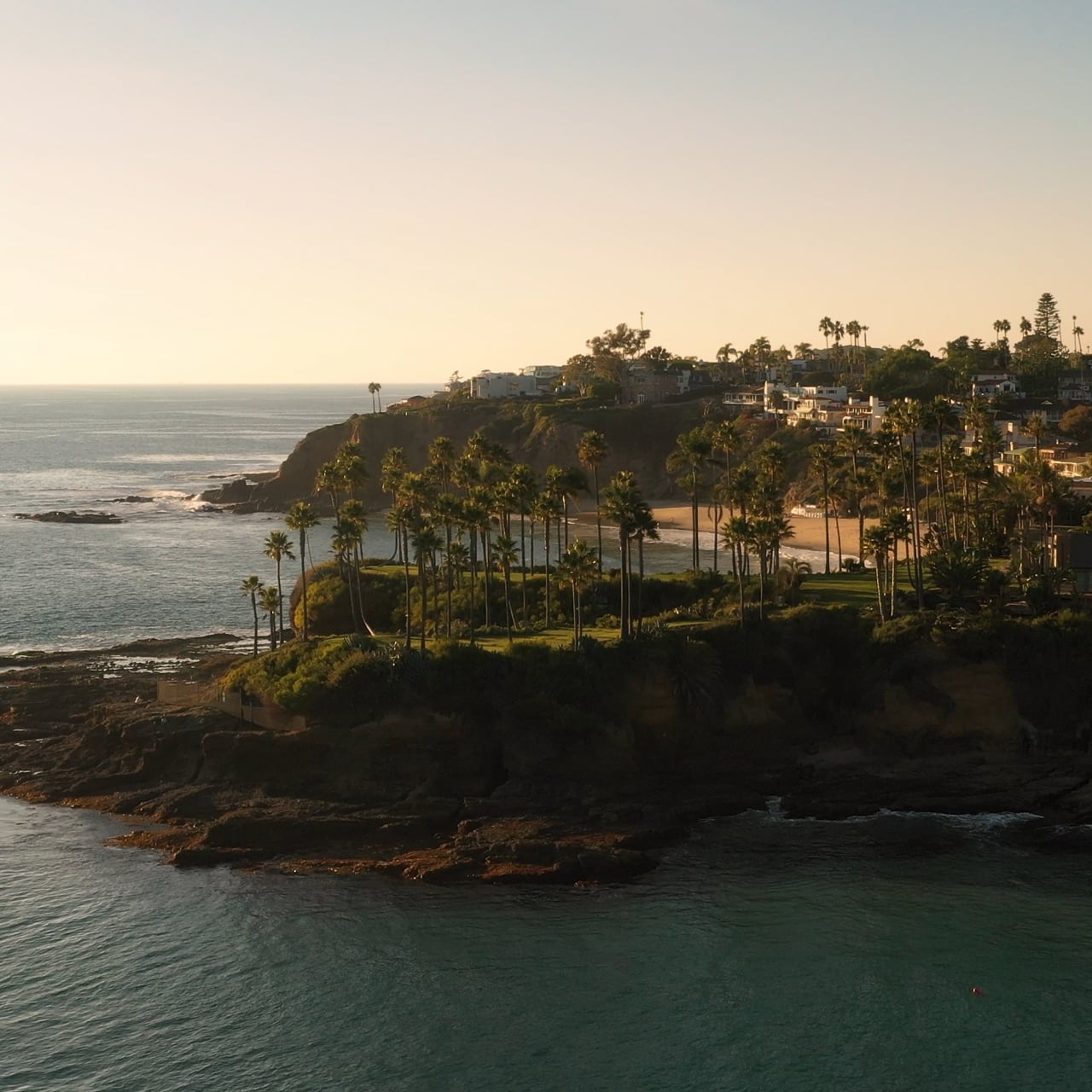 ▶Watch Video of Laguna MPAs & Reef Check SurveyA two-minute look at Laguna’s reefs, inside and outside protection.Watch the video →
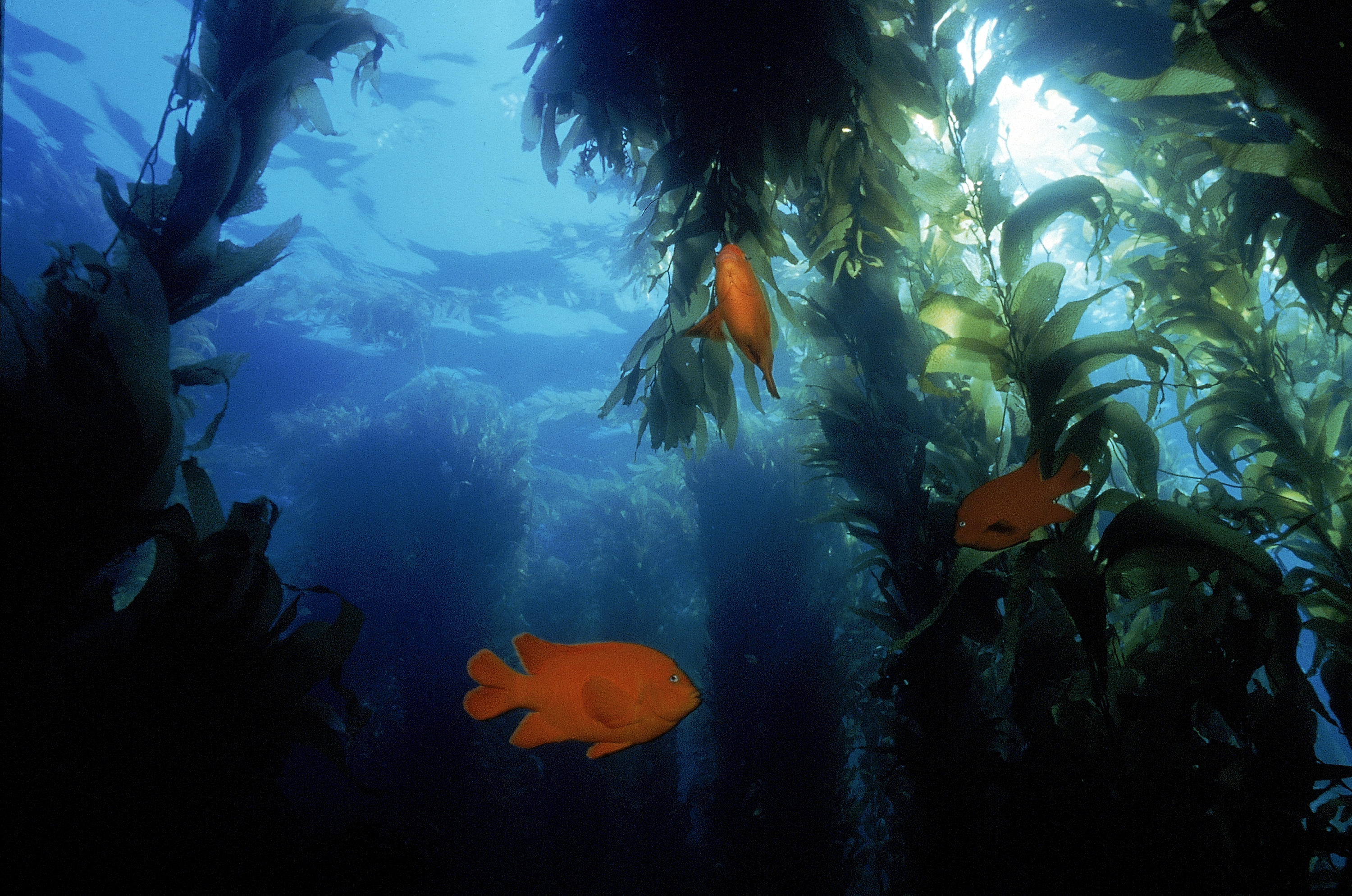 Sign the PetitionAdd your name to extend protection to Laguna’s southern border.Sign now →
Watch
Learn & Explore
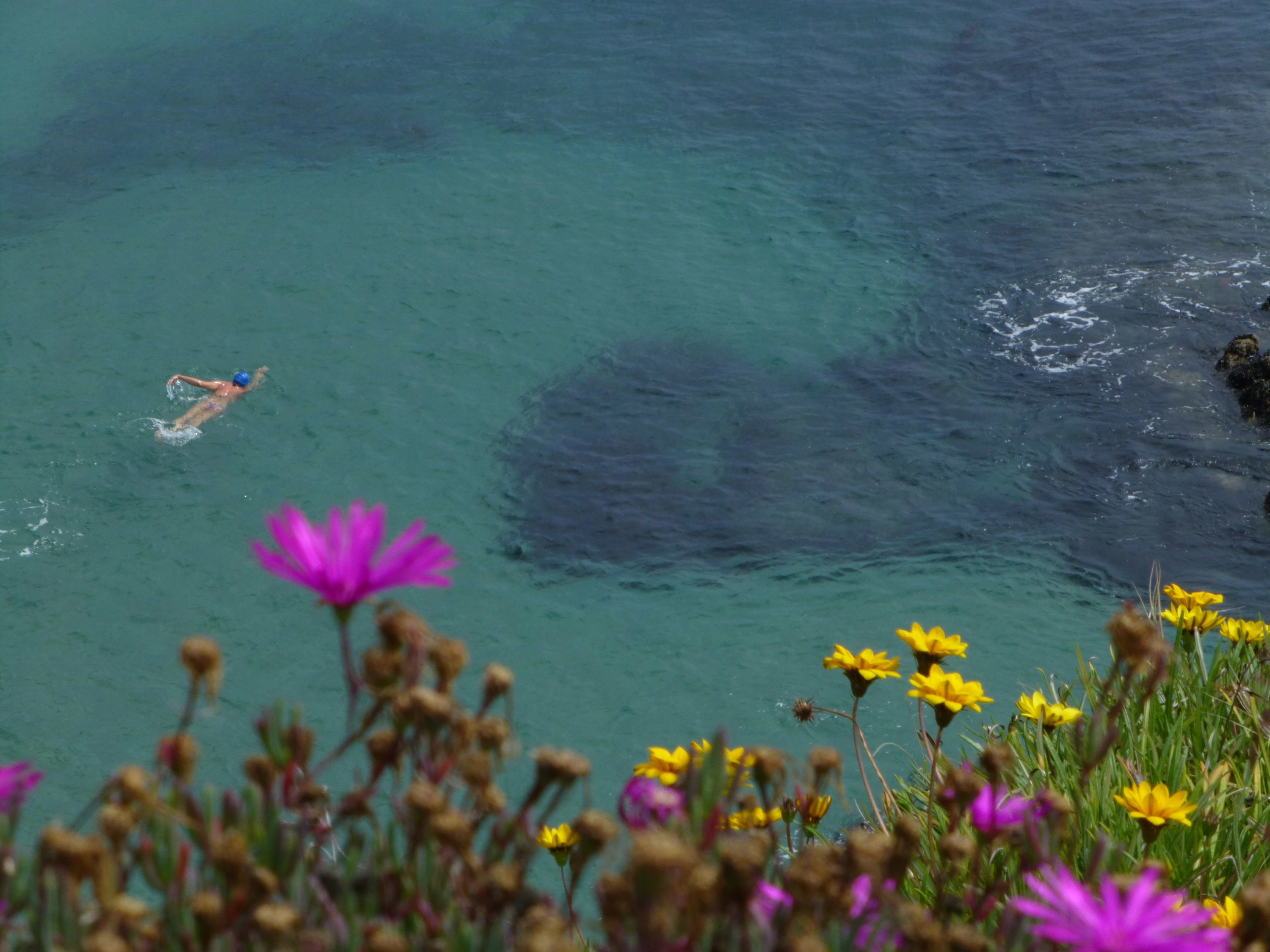 NewWhat Is an MPA?How Laguna’s Marine Protected Areas work, why they mean more fish next door, and how families can explore them.Explore our MPAs →
 Ocean Coloring BookPrint, color and learn what lives just off our coast.Download free →
 15th Photo Contest WinnersThe year’s most inspiring images of Laguna’s Marine Protected Areas.See the winners →Photo: Alex Cowdell, 7th Annual Photo Contest winner
What We’re Working On at Aliso Beach
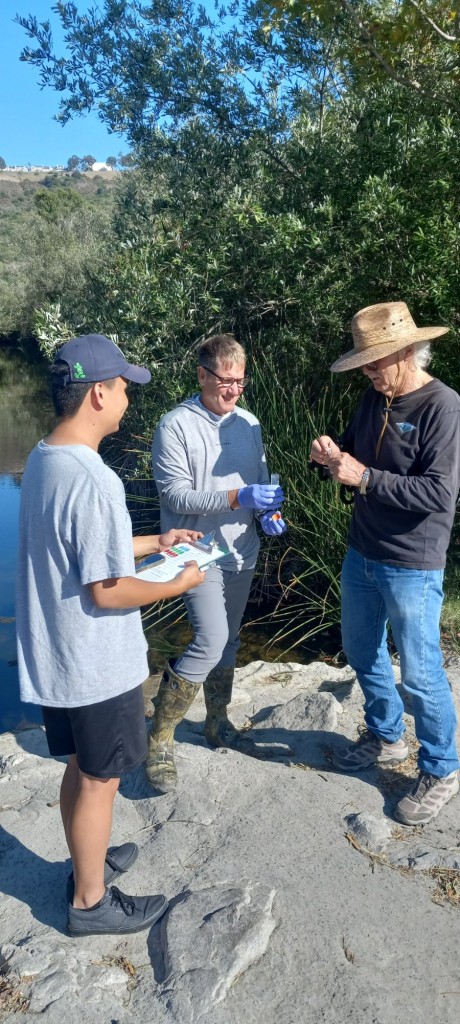
Testing Aliso Creek for GlyphosateWorking with the Hobbs Lab at UC Irvine, we are testing Aliso Creek waters for glyphosate, the pesticide found in Roundup. What flows down the creek ends up in our Marine Protected Areas.

Berm BuddiesFor five years, Berm Buddies has been teaching visitors at Aliso Beach about its ecosystem and what happens when the berm is dug out and the creek pours into the ocean.Look for our booth at Aliso Beach.
What’s New
Sept 2026
OC Coastkeeper honors the Bluebelt at Toast the CoastCo-founders Jinger Wallace and Mike Beanan accepted the recognition on behalf of everyone who has worked to protect sea life in Laguna Beach’s Marine Protected Areas.Stu News Laguna →Laguna Beach Independent →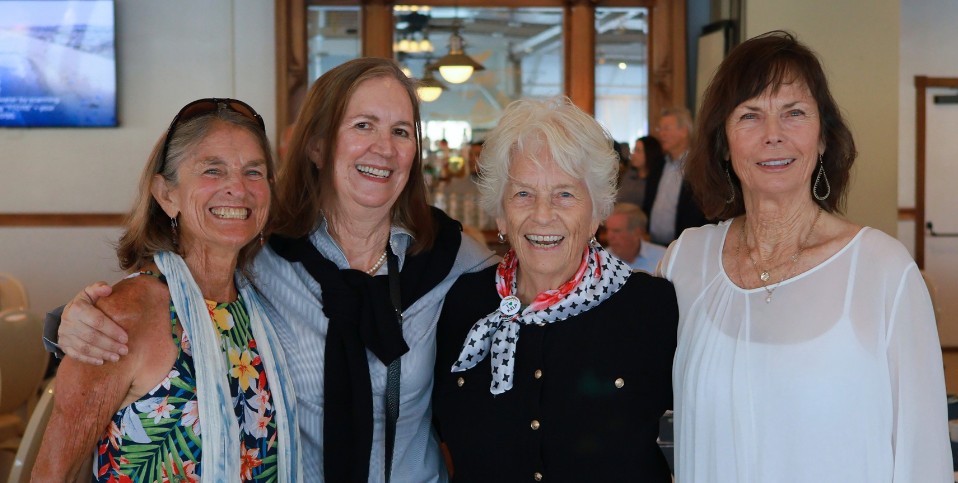
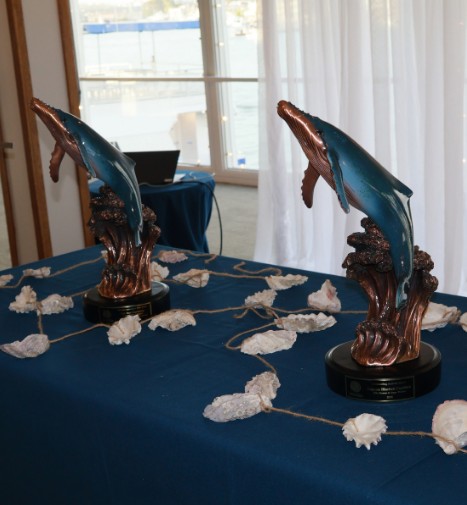 Photos: OC Coastkeeper
2026
15th Annual Photo Contest winnersOur photographers keep showing what protection looks like, from harbor seals to kelp forests.See the winners →
Aug 2025
Our film “The Deep Blue Sea” premieres to a sold-out houseThe Laguna Bluebelt’s short film celebrating our deep connection with the ocean filled the Rivian Theater in downtown Laguna.See photos from the premiere →
Community Support & Our Story
The reserves are ours to restore or lose.
The MLPA planning effort sparked an outpouring of public support from elected officials, local businesses, community organizations and scientists. That support built Laguna’s Marine Protected Areas, and it is just as important today as we work to protect the last unprotected reefs.
Community support →Full MPA history →From our archive: our 2011 video →- 2009Bluebelt members begin testifying at state hearings across California to protect Laguna’s coast
- 2011Laguna Bluebelt Coalition formally founded, and honored with the City of Laguna Beach’s 2010 Environmental Award
- Jan. 1, 2012Laguna’s Marine Protected Areas take effect, protecting most of Laguna’s coastline
- TodayContinuing to work to protect the Last Mile at Thousand Steps and Three Arch Bay
Get Involved
Get our newsletterNews, events and ways to help, a few times a year.Sign up →Donate or joinEvery member and every dollar helps protect Laguna’s ocean.Support us →VolunteerHelp at KelpFest, the Photo Contest or Berm Buddies.Lend a hand →Come to a meetingMeet the people behind the Bluebelt.See meetings →
From the Shoreline

To See a World in a Grain of SandWhat a single handful of Laguna beach can tell us.Read more →

At the Water’s EdgeObservations from a calm day, where swirls of San Onofre Breccia glow like butter.Read more →

Bountiful, Beautiful BLOY!Black oystercatchers, from Dana Point to Crystal Cove, wherever the mussel beds are healthy.Read more →

To See a World in a Grain of Sand
"To see a world in a grain of sand, And a heaven in a wild flower. To hold infinity in the palm of your hand, And eternity in an hour." Read More »Testing Aliso Creek for Glyphosate
What flows down Aliso Creek can end up in Laguna’s Marine Protected Areas.Glyphosate, the active ingredient in Roundup, was sprayed along the creek’s banks to clear invasive Arundo cane, and it can also wash down as urban runoff from six inland cities and Laguna Beach, all part of the Aliso Creek watershed. So the Laguna Bluebelt asked a simple question: how much of it is reaching the creek, and the ocean? How it startedIn March 2025, after reading about Dr. Shakira Hobbs’s water-quality work in UCI Magazine, the Bluebelt wrote to her. Dr. Hobbs had already heard concerns about glyphosate from Orange County residents and officials, and she welcomed the chance to design a study of how it moves through the watershed to the ocean. The Bluebelt, which has worked with Orange County Coastkeeper on Aliso Creek for years, offered volunteers to help with the research.About Dr. Hobbs: Civil & Environmental Engineering professor at UCI and co-founder of BioGals, a nonprofit that empowers women of color and creates solutions for a sustainable world. In 2024 named a Rising Star in Academia.Jinger Wallace, Mike Beanan and Charlotte Masarik on their first visit to the Hobbs Lab.Dr. Shakira Hobbs walks the team through the study plan.Inside the Hobbs Lab at UC Irvine.Dr. Shakira Hobbs.Into the creekFollowing Dr. Hobbs’s detailed sampling instructions, volunteers have now sampled Aliso Creek twice, covering several miles along both banks, often through rough, overgrown terrain.For the second round, in April 2026, Dr. Hobbs built water testing kits for us and recorded a short video showing exactly how to use them. Coordinated by Steve Ernst, our team took 10 samples up and down Aliso Creek, from the ocean up into Aliso and Wood Canyons Wilderness Park. Dr. Hobbs’s lab has not yet analyzed these samples; we will share the results here when they are in.Video: Dr. Shakira Hobbs explains how to collect samples with the UCI water testing kit (4:51).Mike Beanan and Dr. Hobbs hiking in to a sampling site.Mike Beanan and Dr. Hobbs at the creek.Dr. Hobbs collecting a water sample.Recording a sample with UC Irvine graduate student Harvey Yang, Steve Ernst and Mike Beanan.The Aliso Creek watershedAt a glance36 square miles of land drain into Aliso CreekThe creek runs 19.8 miles, from just north of Santiago Canyon Road to Aliso BeachAll or part of seven cities: Lake Forest, Mission Viejo, Laguna Woods, Laguna Hills, Aliso Viejo, Laguna Niguel and Laguna BeachWhatever runs off those streets, lawns and slopes can end up at Aliso Beach, next to Laguna’s Marine Protected AreasMap: H2OC, Orange County Stormwater Program. Facts: H2OC Aliso Creek Watershed fact sheet.Trail map at Aliso and Wood Canyons Wilderness Park. The April 2026 sampling ran from the ocean up into the park.A water-quality warning sign at Aliso Beach. Pesticides are only one of the things runoff carries to the creek mouth.“I’ve known Aliso Creek for years and have long been concerned about the pesticides in the urban runoff that flows into it. Testing for glyphosate was something new, and a great opportunity to find out whether it’s there. With Dr. Hobbs’s instructions in hand, our team carefully took samples along both banks of the creek, through brush and over rocks, filling and labeling each bottle with care. It’s slow work, and it matters. Runoff from seven cities and two major freeways flows down the creek to Aliso Beach, a popular family beach, where it ponds on the sand right in front of Laguna’s protected reefs. To protect the ocean, we need to know what’s flowing into it.”— Mike Beanan, Laguna Bluebelt CoalitionSampling team Steve Ernst, Jinger Wallace and Mike Beanan in Aliso Wood Canyons.Every sample is logged on a field worksheet.“Getting ten samples from the ocean all the way up into the wilderness park took planning, good boots and a great team. Volunteers can do real science when a researcher like Dr. Hobbs shows us how. Now we wait to see what the creek tells us.”— Steve Ernst, sampling team coordinatorWhat we foundDr. Hobbs’s lab analyzed our first round of samples, taken at three points: near the ocean, at the PCH bridge, and upstream past the PCH bridge. The lab tested for glyphosate and for AMPA, the chemical glyphosate breaks down into.Glyphosate (Roundup) was found at one of our three sites, at a very low level: 0.06 parts per billion, upstream of the PCH bridge. That is below 0.1 ppb, the strictest drinking-water standard in the world, which the European Union applies to any single pesticide.AMPA was found at every site: 0.1 ppb near the ocean, 0.05 ppb at the PCH bridge and 0.06 ppb past the PCH bridge. AMPA is the main breakdown product of glyphosate, but it can also come from other herbicides and from industrial sources. Testing the samples’ isotopes, a kind of chemical fingerprint, could show where it came from, and Dr. Hobbs is looking for a lab that can do that analysis. AMPA lasts longer in the environment than glyphosate and is more harmful to aquatic life. There are no regulatory limits for it.These numbers are low. But they come from a single day’s samples, and as Dr. Hobbs cautions, one sample can’t tell us what is in the watershed over time. That takes long-term monitoring.Why it mattersGlyphosate, the active ingredient in Roundup, is the most widely used weed killer in the world, and concern about its health effects keeps growing. In 2015 the World Health Organization’s cancer agency (IARC) classified it as “probably carcinogenic to humans.” A 2019 review of studies found a 41% higher risk of non-Hodgkin lymphoma among the most heavily exposed people, such as farm workers.In 2025, a long-term study by the Ramazzini Institute found tumors and early leukemia deaths in rats given doses that European regulators consider safe. The U.S. EPA still considers glyphosate safe when used as directed, and the European Union renewed its approval in 2023. But the evidence keeps growing.Glyphosate was also long thought to bind to soil and stay where it’s sprayed. Field studies show otherwise. The largest U.S. study, by the U.S. Geological Survey, tested thousands of samples from 38 states. It found that glyphosate and AMPA move through the environment and are widespread: in soil, ditches and drains, creeks and rivers, and even rain.Another USGS study found that city use, not just farming, sends glyphosate into streams, and that AMPA turns up far more often than glyphosate itself. That is the same pattern we found in Aliso Creek. Most levels measured were below official limits, but pesticides usually arrive in mixtures, and the long-term effects of low, steady exposure on creek and ocean life are still unknown. That’s why we want to know how much of it reaches Aliso Creek, and the ocean.Laguna residents spoke up, and the city listenedAfter strong community concern about herbicides sprayed on hillsides near homes, trails and creeks, the Laguna Beach City Council stopped herbicide use in the city’s fuel modification zones in January 2024. It’s a large area: about 125 acres of hillside open space. In August 2025, with more than 20 residents speaking, the Council voted 5–0 to keep that work herbicide-free.Under the city’s current rules, herbicide may be used in these zones only as a last resort against a short list of aggressive invasive plants, and never within 30 feet of trails, 50 feet of parks, streets and waterways, or 100 feet of schools, unless the Council approves an exception at a public meeting. Property owners can also ask in writing to keep herbicide off their land, and neighbors must get at least one week’s notice before any application.Read the city’s rules (Aug. 12, 2025 agenda report) → · Laguna Beach Indy coverage →What’s nextDr. Hobbs’s lab will analyze the 10 samples we took in April 2026, and we will post the results here. She has also proposed long-term monitoring of the watershed to the National Science Foundation, because only repeated sampling over time can show what is really in the creek.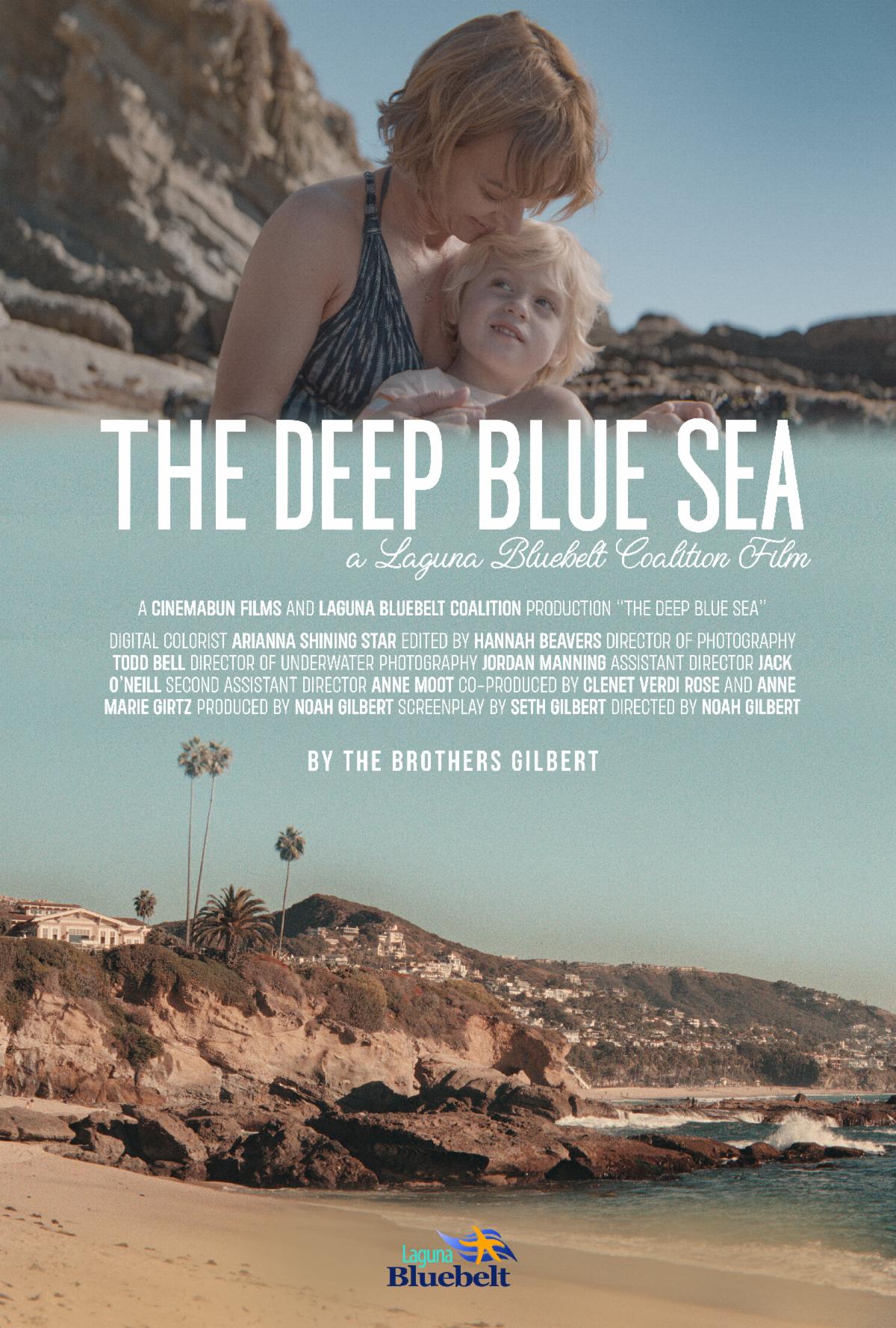
Premiere of Film “Deep Blue Sea” Sold Out and a Splash at Rivian!
The Laguna Bluebelt Coalition’s short film The Deep Blue Sea premiered to a full house at the Rivian Theater in downtown Laguna on August 25. The film celebrates our deep connection with the ocean, our loved ones, and ourselves. More screenings are on the horizon! Already a Finalist in three Film Festivals including Dana Point film festival on October 11!A heartfelt thank-you to everyone who joined us for this special night and helped make the premiere unforgettable! The Rivian Theater was packed to the brim with ocean enthusiasts ... standing room only for the premiere! The film was a true labor of love. A director, videographer, scriptwriter, editor, and other talented filmmakers from Hollywood donated much of their time and energy to bring it to life. A local underwater videographer showed Laguna's underwater beauty, while Laguna’s Marine Safety team helped to keep things running smoothly behind the scenes.
Shoreline Strolls – Edges and Ledges of Laguna
Here we are scrambling over the Aliso Creek Ledges to Camel Beach. "Girls just wanna have fun!" Read More »


At The Water’s Edge
Observations and thoughts on a flat, calmy day at the water's edge in August: Sedimentary rock of taffy San Onofre Breccia swirls is a glorious sandstone with a color as vibrant as butter that abuts our beaches. Read More »


BOUNTIFUL, BEAUTIFUL BLOY!
Over the years we have seen Black Oyster Catchers (BLOY) from Dana Point in the south to Crystal Cove in the north, wherever there are healthy mussel beds and rocky ledges. Read More »
Wrack, Wrack, Glorious Wrack.
Laguna Beach Walkers Walk the Wrack. Definition: Perhaps from Middle Dutch, wrak,wreckage; the term corresponds to Old English wraec Wrack. Hence the term "Wrack and Ruin" Read More »

Winter Low Tides
What is hidden under the water during the hot summer sun is uncovered in the cooler winter months. Read More »

Leopard Sharks,
Bat Rays and Me
If you're (fool) hardy enough to get in the water to snorkel or scuba in the late fall/early winter Read More » 

Tidepool Tales and Kelp
You don't have to get into the water to notice the tremendous increase in the kelp forest off Laguna over the last year. A number of groups including thousands of individuals Read More »Friend’s Corner
We are honored that Sylvia Earle would enthusiastically wear a "Reserve Laguna" button to indicate her support for our efforts.
She has been called "Her Deepness" by the New Yorker and the New York Times, "Living Legend" by the Library of Congress, and the first "Hero for the Planet," is an oceanographer, explorer, author...Learn More

Contact Us · Donate · Get our newsletter · All Pages
© 2011–2026 Laguna Bluebelt Coalition. All rights reserved.
